
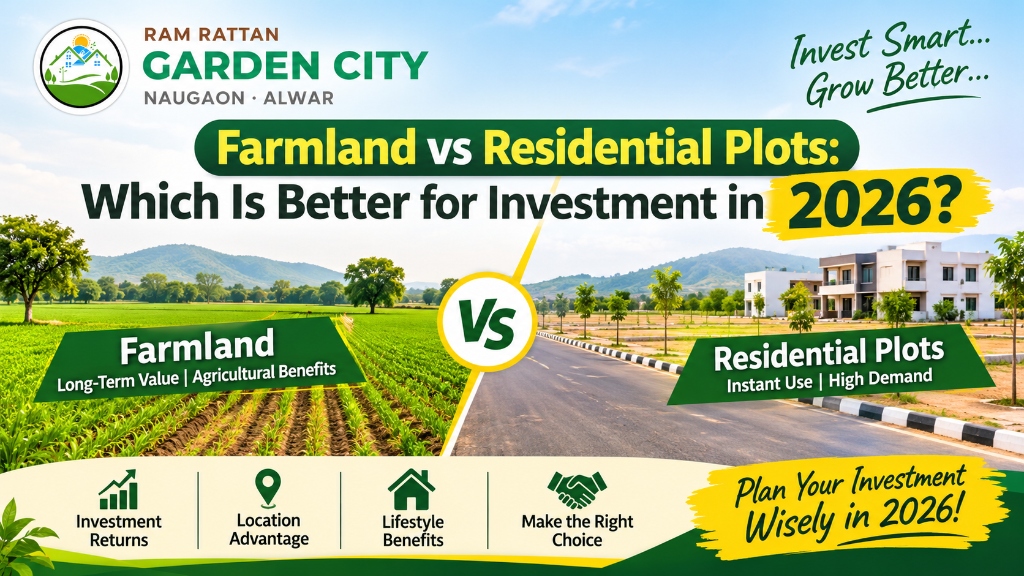
It is one of the oldest debates in land. Should you buy cheap farmland and wait, or pay more for a residential plot you can build on?
Both can make money. But they are not the same bet, and in 2026 the gap between them matters more than ever. If you are weighing residential plots investment in 2026 against a farmland buy, here is an honest look at how they compare, and which one suits which kind of buyer.
First, What Are We Actually Comparing?
Let us be clear on terms.
Farmland is agricultural land. It is meant for farming, not homes. To build on it, you need a change of land use, often called a CLU.
A residential plot is land already meant for homes. If it is registered and titled, you can build on it from day one.
That one difference — what the land is allowed to be used for — drives everything else.
The Honest Case for Farmland
Farmland is not a bad buy. In the right hands it works.
The entry price per yard is lower. You can pick up a large parcel for less. If you actually want to farm, or hold a big piece of open land for the long run, farmland fits. In a rising belt, raw land can also appreciate well over many years.
So farmland suits a specific buyer: someone who wants scale, the lowest entry price, and who is ready for the paperwork and the wait.
Where Farmland Trips People Up
The trouble starts when a farmland buyer wants a home or a clean, quick investment.
To build, you need that change of land use (CLU). The process is slow, and it can cost ₹10 to ₹50 lakh in fees. Even after you pay, only about 60% of the land is usually usable for homes. The rest is lost to setbacks, green norms, and roads.
On top of that, farmland often comes without RERA and without clear title. There are no roads, no security, no amenities. And when you want to sell, the pool of buyers is smaller, so resale can be slow.
Cheap land, in other words, can turn expensive and slow once you try to use it.
The Case for Residential Plots
A residential plot costs more per yard. You are paying for what it saves you.
You can build from day one, with no conversion and no grey area. A good one is RERA-registered and titled, so the paperwork is clean. It sits inside a planned layout, with roads, water, power, security and amenities already designed in. Banks lend against it, so finance is easier. And because more people want a build-ready plot, resale tends to be smoother.
You pay a premium for certainty. For most buyers, that is money well spent.
Farmland vs Residential Plots at a Glance
| Feature / Parameter | Farmland | Residential Plot |
|---|---|---|
| Entry price per yard | Lower | Higher |
| Can you build? | Only after a CLU | Yes, from day one |
| Conversion cost | ₹10 to ₹50 lakh | None |
| Usable land | About 60% after conversion | Full planned plot |
| RERA and title | Often none / ambiguous | Registered and clean |
| Amenities and security | None | Gated and planned |
| Home loan | Rare | Available (HDFC, BOB) |
| Resale liquidity | Slower | Easier |
Which Is the Better Investment in 2026?
Here is the honest answer. It depends on the buyer, but for most people in 2026, the residential plot wins.
The reason is risk, not just price. A registered residential plot gives you a clean, build-ready asset with fewer unknowns. Farmland asks you to take on the conversion cost, the title risk and a slower resale, in exchange for a lower sticker price.
In a year when buyers are more careful and paperwork is under more scrutiny, certainty is worth paying for. Add the hidden costs of farmland, and the real gap between the two is smaller than it first looks.
None of this is a promise of returns. Land value always depends on the market and on patience. But as a cleaner, lower-risk way into a growing belt, residential plots are the more sensible choice for most.
Which One Fits Your Life?
Money is only half the decision. Use is the other half.
Farmland gives you open space, but little you can do with it soon. A residential plot gives you something you can build on and enjoy. A weekend home now. A family home later. A place, not just a holding.
If you want your investment to double as a lifestyle, a residential plot is the clear pick. You get the asset and the escape in one buy.
The Naugaon Angle
This is where the comparison gets practical.
Naugaon, in Alwar, is a good example of a belt where both options exist side by side. You can buy raw farmland cheaply. Or you can buy residential plots near Naugaon that are already registered and planned.
The pull is the location. Residential plots near the Delhi-Mumbai Expressway sit close to the road that is reshaping this corridor, about three kilometres away, with Gurugram roughly 65 to 70 minutes on. Early in the cycle, clean on paper, close to the thing that drives value.
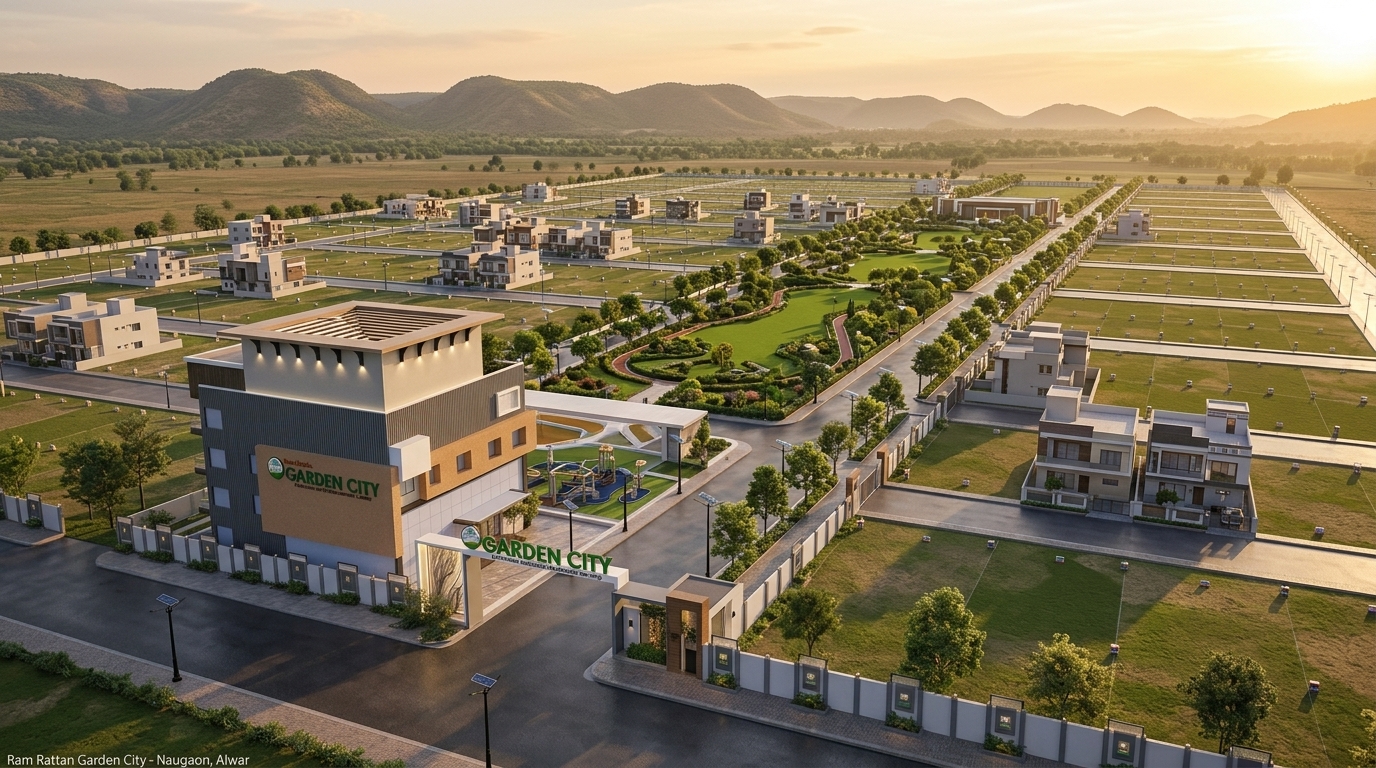
Garden City is one such option. A RERA-registered residential township, No. RAJ/P/2026/5239, of 101 plots, priced at ₹50,000 per square yard, with plots starting from about ₹85 lakh. The farmland next door may cost less per yard. The Garden City plot gives you more that you can actually use.
So, Which Is Better in 2026?
If you want scale, the lowest entry price and you are ready for the CLU process, farmland can still work.
For almost everyone else, a registered residential plot is the better investment in 2026. Cleaner paperwork, lower risk, something you can build on, and an easier exit when you want one.
The best way to feel the difference is to see it. Book a site visit at Garden City and we will walk you through the plots, the plan and the paperwork, so you can compare with clear eyes.
Frequently Asked Questions
What is the difference between farmland and residential plots for investment?
Farmland is agricultural land, so you cannot build a home on it without a change of land use (CLU), which is slow and costly. A residential plot is already meant for homes, and if it is registered and titled, you can build from day one. Farmland is cheaper per yard but limited and often unregistered. A residential plot costs more but is build-ready, titled and usually RERA-approved.
Is farmland or a residential plot a better investment in 2026?
For most buyers in 2026, a registered residential plot is the better bet. It is cleaner on paper, lower on risk and easier to build on or resell. Farmland can suit buyers who want large agricultural parcels or the lowest entry price and are ready for the conversion process. Returns in either case depend on the market.
Are residential plots near Naugaon a good option for long-term investment?
Yes, for a patient buyer. Residential plots near Naugaon, close to the Delhi-Mumbai Expressway, sit early in a growing corridor on clean, titled land. Garden City is one such RERA-registered option. Land rewards patience, and value always depends on the market.